4 Common Causes of Blood Sugar Spikes
High-Sugar Foods: Consuming sugary snacks and beverages can lead to rapid increases in blood sugar. Foods high in refined sugars, like candy, soda, and pastries, can cause quick spikes.
Carbohydrate Overload: Eating large portions of carbohydrates—especially simple carbs like white bread, pasta, and rice—can overwhelm your body’s ability to regulate blood sugar, leading to spikes.
Lack of Fiber: A diet low in fiber can affect blood sugar control. Fiber helps slow down the digestion and absorption of sugar, preventing spikes. Without enough fiber, blood sugar can rise quickly after meals.
Stress and Lack of Sleep: Chronic stress and inadequate sleep can affect hormone levels, particularly cortisol, which can lead to increased blood sugar. Managing stress and ensuring restful sleep are crucial for maintaining balanced levels.


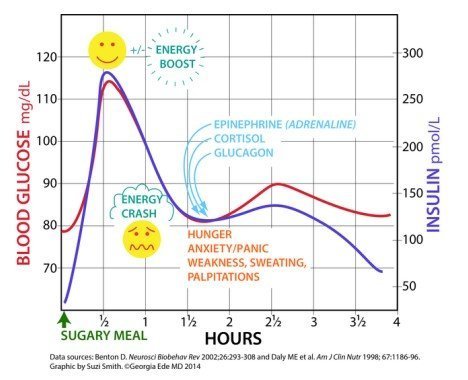
Spikes and crash in blood sugar can significantly impact mood and emotional well-being
Energy Levels: Low blood sugar (hypoglycemia) can cause irritability and anxiety, while high blood sugar (hyperglycemia) may lead to lethargy or confusion.
Cognitive Function: Blood sugar crash after high refined carbs meal can impair
concentration and decision-making, potentially leading to frustration or mood swings.
Emotional Regulation: Consistent spikes and drops in blood sugar can make it harder to
regulate emotions, leading to increased irritability and moodiness.
Cravings and Eating Patterns: Oscillations often lead to cravings for sugar or carbohydrates, which can create a cycle of overeating and further fluctuations in mood.
6 Habits to Prevent Blood Sugar Spikes
Choose Whole Foods: Opt for whole grains, fruits, vegetables, lean proteins, and healthy fats. These foods are generally lower in sugar and higher in fiber, which can help stabilize blood sugar.
Monitor Portion Sizes: Be mindful of portion sizes, especially with carbohydrates. Smaller, balanced meals can help prevent large spikes in blood sugar.
Stay Hydrated: Drinking plenty of water can help your body regulate blood sugar levels more effectively. Aim for at least 2 L a day. Make sure you have a nice big water bottle that keeps your water chilled and fresh and helps you monitoring your water intake.
Incorporate Regular Exercise: Physical activity helps increase insulin sensitivity, allowing your cells to use blood sugar more effectively. Aim for at least 150 minutes of moderate exercise each week.
Avoid Skipping Meals: Skipping meals can lead to overeating later in the day and cause blood sugar spikes. Eating smaller, balanced meals throughout the day can keep levels stable.


By understanding the factors that influence blood sugar levels and adopting healthier habits, you can take control of your health and well-being. Remember, small changes can lead to significant improvements!
At Purewellness, our team recognizes how vital proper nutrition, hydration, and stress management are for overall well-being. Nature offers countless remedies which we have in our online store, but they work best when combined with daily self-care practices.
We hope you’re finding our newsletters valuable! If you have any questions about our products, please don’t hesitate to reach out. As a small family business, we’re here to help.